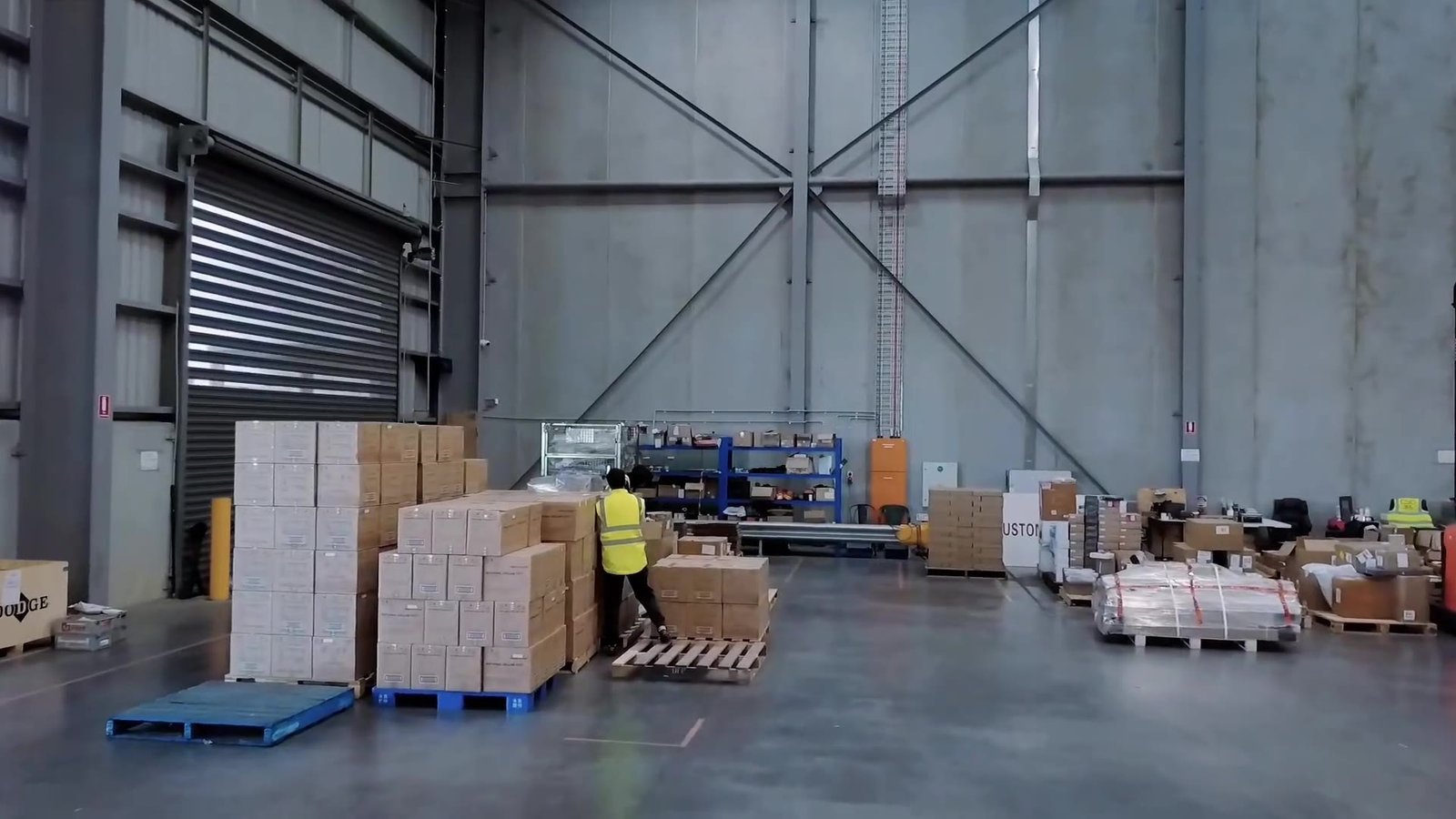

The same product can leave a warehouse in two very different ways: as one item in a customer parcel, or as part of a carton or pallet for a business customer.
Sharing inventory can make commercial sense, but it does not make the fulfilment instructions identical. When a business adds a new channel, the service brief needs to describe the differences before a warehouse is asked to handle them.
Define the unit being sold and the unit being moved
Start with the product hierarchy. An individual unit, an inner pack and a master carton are related, but they are not interchangeable. Record the number of units in each pack and the barcodes used at each level.
This becomes particularly useful when a wholesale order asks for cartons while an online order asks for individual items. The stock and order records need to express both requests without leaving the warehouse to infer the conversion. Mixed cartons and broken packs deserve explicit instructions.
Separate the destination rules
A consumer parcel may need a gift insert, a packing slip and a delivery label. A retail destination may ask for carton labels, a purchase order reference, a pallet configuration or a booked receiving window. The brief should list the requirements by destination or order type.
Ask who provides these instructions, how changes are approved and what happens if information is missing. A delivery rule buried in a salesperson’s email cannot reliably guide every future order. Keep a controlled version where the operation can find it.
Agree how stock is made available
One physical stock pool still needs an allocation policy. You may want both channels to draw from the same available balance, or you may need to hold some inventory for a scheduled wholesale commitment. The right approach depends on the business and on the systems involved.
Discuss what happens when stock is limited. Can an order be split? Can a wholesale line be partly supplied? Who approves substitutions? These are business decisions with warehouse consequences. A clear instruction is more useful than an assumption that every channel has the same priority.
Plan for the work inside the carton
Retail preparation and ecommerce presentation can require different handling even when the products are identical. A product may need an extra label for one destination, a branded sleeve for another or assembly into a campaign kit.
Describe the work as a repeatable recipe. Specify the product, the materials, the required output and the point at which the task happens. That makes it easier to assess the labour and consumables involved and to avoid paying for the same handling twice in an overlapping service scope.
Keep the dispatch record useful to each team
The customer support team and the wholesale account team may ask different questions. One might need parcel tracking; the other might need carton counts, dispatch references and a record of what remains outstanding.
List the information you need to receive and the point at which it becomes available. System compatibility and data flows should be checked for your actual configuration. A platform name by itself does not describe every field, status or exception the business needs to manage.
Test both the ordinary and awkward orders
Use examples from both channels when reviewing the workflow. Include a single item, a mixed basket, a full master carton and an order that breaks the usual pack quantity. If retail preparation is part of the service, inspect that output too.
Tests should answer practical questions. Can the stock movement be reconciled? Is the unit of measure clear? Are the labels and packaging correct? Does each team receive the information it needs? This is where the difference between a shared stock pool and a workable shared operation becomes visible.
A better multichannel brief
Bring the product hierarchy, channel split, destination instructions, stock allocation decisions and representative orders. The aim is one understood operation with the right rules for each type of work.